The Evolution of Human Languages: Their Past, Present and Future
-
Why do humans speak thousands of different languages when communication is supposed to bring us together? And could the world one day speak just one?
We share our world with thousands of other animal species, yet humans are unique in having so many different languages that we cannot all understand one another. So how did language begin, and why did it develop in this extraordinary way?
Join us for a fascinating talk by Professor Mark Pagel of the University of Reading, who will explore the origins and evolution of human language. When did we first begin to speak? Could Neanderthals talk, too? How and why do languages change over time, and what can their distribution around the world tell us about human history?
Looking to the future, Professor Pagel will consider whether the world’s languages might eventually converge into a single global language — bringing us full circle to the very beginnings of human speech.
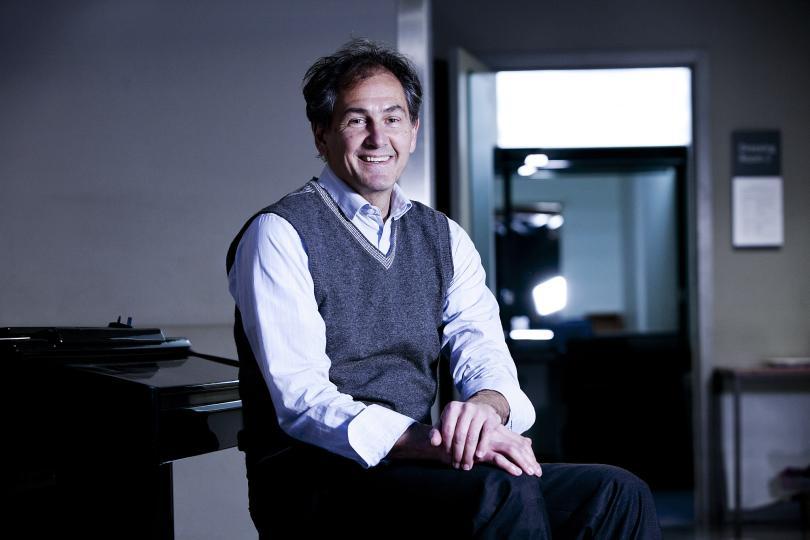
Mark Pagel is a Fellow of the Royal Society, Professor of Evolutionary Biology at Reading University and an External Fellow of the Santa Fe Institute. He is best known for his work on building statistical models to identify the evolutionary processes underlying animal and human behavior, from genomics to the emergence of complex systems -- to language and culture. He is the Editor-in-Chief of the award-winning Oxford Encyclopedia of Evolution and co-author of The Comparative Method in Evolutionary Biology which is regarded as a classic in the field. He is widely published in Nature and Science, and has lectured widely including presentations at the World Economics Forum. His book Wired for Culture: Origins of the Human Social Mind published in 2012 was named as one of the best science books of the year by the Guardian newspaper.